

Brain Drain and Economic Collapse: Who Is Leaving Belarus?

Table
Belarus stands at a crossroads. Once known for its industrial base and growing tech sector, the country is now experiencing sustained emigration that raises questions about its long-term economic viability and social cohesion. Brain Drain and Economic Collapse: Who Is Leaving Belarus? is not just a question of numbers — it’s a question of identity, opportunity, and national resilience.
Understanding the Brain Drain in Belarus
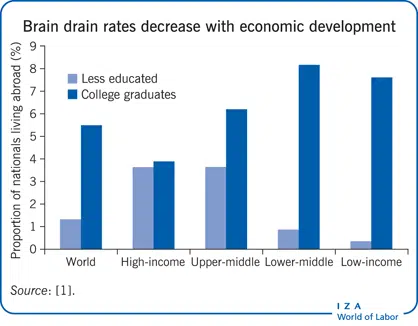
“Brain drain” refers to the emigration of skilled and educated individuals seeking better opportunities abroad. In Belarus, this phenomenon has intensified in recent years due to factors including limited career prospects, political instability, and stagnating wages. Many emigrants are professionals — engineers, IT specialists, academics, healthcare workers — leaving behind an ageing population and creating gaps in strategic economic sectors.
Estimates suggest that hundreds of thousands of Belarusians have left the country since 2020, with a significant portion under the age of 44 — prime working years for economic contribution and family growth. These departures represent a notable loss of human capital at a time when the country faces economic challenges.
Who Is Leaving Belarus?
Young Professionals and IT Talent
Belarus’s technology and innovation sector once boasted rapid expansion and an active startup culture, particularly in Minsk’s Hi-Tech Park — long considered one of the country’s economic success stories. However, this sector has been hit hard by emigration. Many IT specialists have relocated to countries like Poland, Lithuania, Cyprus, and Latvia in search of greater stability, better pay, and access to global markets.
Analysts estimate that upwards of 20,000 IT professionals left Belarus in recent years — a substantial share of its skilled tech workforce. This talent flight has weakened domestic innovation capacity and reduced the sector’s ability to contribute to economic growth.
Young Families and Students
Emigration is not limited to tech professionals. Many young families and students have also left Belarus. In nations like Poland and Lithuania, Belarusians obtain residence permits, pursue higher education, or seek employment opportunities that are less constrained by government controls.
Poland, in particular, has become a major destination, with hundreds of thousands of Belarusians living there as permanent or temporary residents. The demographic profile of emigrants often skews toward those in their 20s and 30s — the cohort most critical for long-term economic productivity.
Professionals in Healthcare, Engineering, and Academia
Beyond technology, other sectors are affected. Healthcare workers, engineers, and academics are among those seeking opportunities abroad. Shortages in the domestic labor market have been attributed to the departure of these professionals, impacting Belarus’s ability to maintain essential services and infrastructure.
The migration of such professionals not only affects immediate service delivery but also denies Belarus future leaders in research, medicine, and technical innovation — a long-term challenge for economic competitiveness.
What Drives People to Leave?
Economic Motivation
Economic pressures are central to understanding the outflow of Belarusian citizens. Limited job opportunities, suppressed wages, and wage stagnation have led many to seek higher incomes abroad. In some sectors, average salaries in Belarus lag behind those available in neighboring European countries, making migration a compelling economic decision.
In addition, inflationary pressures and economic stagnation — influenced by broader geopolitical tensions in the region — erode purchasing power and reduce prospects for long-term prosperity at home. These conditions incentivize young professionals to pursue careers elsewhere.
Political uncertainties have also contributed to emigration. Following the disputed 2020 presidential election and subsequent crackdowns on opposition voices, many young Belarusians — including students and intellectuals — have left the country. The lack of political freedom, uncertainty about future governance, and fears of repression shape decisions to build lives abroad rather than remain at home.
Although Belarus’s official media downplays these departures, independent analyses emphasize that political and economic factors combined accelerate migration among highly educated and politically conscious cohorts.

The Economic Impact of Brain Drain
The departure of skilled workers is more than a demographic trend — it has measurable economic consequences. Economists estimate that the loss of human capital has reduced potential added value in the economy by several billion dollars annually, slowing growth and weakening domestic competitiveness.
Labor shortages in key industries — particularly those requiring specialized skills — constrain businesses’ ability to expand and innovate. Open positions in sectors like technology, healthcare, and engineering remain unfilled, reducing productivity.
Moreover, the departure of younger workers accelerates the aging of the remaining population, increasing the dependency ratio and raising long-term pressures on social services, pensions, and public finances.
Demographic Shifts and Long-Term Consequences
Emigration affects not only the workforce but also the demographic structure of Belarus. The population has declined over recent years due to combined factors of emigration and low birth rates. Independent data indicate that repeated outflows of young families and professionals contribute to aging demographics, which in turn limits future economic dynamism.
Labor force shrinkage also increases competition for workers, and while this can temporarily push wages upward, it also risks inflationary pressures that hurt living standards. A shrinking workforce limits the country’s ability to attract investment or expand production capacity.
International Dimensions: Where Belarusians Go
Belarusians migrate to a variety of destinations, influenced by geographic proximity, economic opportunity, and migration policy. Neighboring EU countries such as Poland and Lithuania have become popular for work and education, while Russia remains a destination due to historical ties and fewer language barriers.
In Poland, hundreds of thousands of Belarusians hold residence permits, integrating into the local labor market and contributing to host economies. Many also pursue higher education, with long-term residence possibilities.
In contrast, smaller numbers move to Germany, the Czech Republic, and other European nations, reflecting diverse aspirations among emigrants — from economic betterment to political safety and professional growth.
Is There a Silver Lining?
Brain drain does not inevitably mean loss. Some analysts argue that emigration can evolve into a form of “brain exchange” — where emigrants contribute skills, investment, and networks back to their home country, even without returning permanently. However, this potential requires intentional policy frameworks and diaspora engagement strategies. :contentReference[oaicite:20]{index=20}
In a globalized world, skilled professionals abroad can foster international connections, remittances, and knowledge transfer if encouraged and mobilized. Without such strategies, however, the default outcome remains a net loss for Belarus’s domestic economy and society. :contentReference[oaicite:21]{index=21}
Brain Drain in a Time of Economic Strain
Brain Drain and Economic Collapse: Who Is Leaving Belarus? reveals a complex interplay of economic, political, and social factors driving emigration. From young tech talent to families and healthcare professionals, the outflow of people reflects deeper structural challenges in Belarus.
Understanding these dynamics is essential not only for policymakers and economists, but for citizens and observers who seek to grasp how the country’s future might unfold. Whether loss becomes opportunity depends on how Belarus and its diaspora adapt to changing economic realities and geopolitical pressures.
Climate Change, Agriculture, and Small Cities in Belarus: Challenge and Opportunity

The economy that operates in the shadows: A look at the informal economy in Belarus

Impact of the War in Ukraine on the Belarusian Economy and Society
Belarus Human Rights Crisis 2025: The Silent Struggle Under Lukashenko’s Regime

Belarus Sanctions 2025: How International Pressure Shapes the Regime
Belarus Economy 2025: How Sanctions and Russian Dependence Shape the Future
 English