
Belarusian Resistance Movements of the 20th Century

Resistance in Belarus did not emerge suddenly in the modern era. It is the product of a long historical process shaped by foreign domination, cultural suppression, authoritarian governance, and repeated struggles for autonomy and dignity. This category traces the evolution of resistance in Belarus from early historical forms to contemporary movements, highlighting continuity, adaptation, and collective memory.
Understanding the history of resistance is essential for interpreting present-day opposition. Acts of defiance, whether armed, cultural, civic, or symbolic, form a lineage that informs how Belarusians respond to power today.
Belarusian resistance has deep roots in struggles over land, language, and self-determination. Throughout periods of imperial rule, local communities resisted cultural assimilation and political control through preservation of traditions, religious practices, and oral histories.
These early forms of resistance were often subtle but enduring, establishing a foundation for later national consciousness and political mobilization.
During imperial domination and later under Soviet control, resistance took both overt and covert forms. Armed uprisings, partisan warfare, underground networks, and cultural preservation efforts coexisted with harsh repression.
The Soviet period institutionalized surveillance and punishment but also produced dissident movements, intellectual opposition, and quiet acts of nonconformity. Literature, language use, and historical memory became tools for preserving identity under ideological pressure.
The late twentieth century marked a turning point with the collapse of the Soviet Union and the emergence of an independent Belarus. Early independence brought political pluralism, civic activism, and debates over national direction.
However, this period was short-lived. Consolidation of power curtailed democratic institutions, pushing resistance into new forms. Protests, opposition parties, and civil society organizations emerged as primary vehicles for dissent.
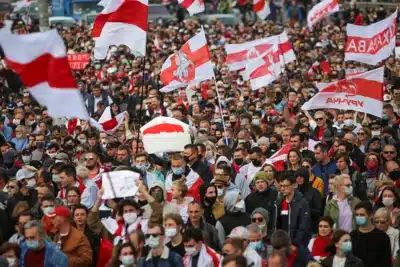
Public resistance intensified during moments of political crisis, particularly around contested elections and social unrest. Large-scale demonstrations reflected widespread frustration and a desire for accountability. These movements were characterized by peaceful participation, decentralized organization, and broad social involvement.
State responses consistently involved repression, but each wave of protest expanded political awareness and collective experience.
When direct political action is constrained, culture becomes a battleground. Art, music, language, and historical symbols play a crucial role in sustaining resistance. Symbolic acts, memorials, and reinterpretations of history challenge official narratives and preserve alternative identities.
This form of resistance operates quietly but persistently, shaping values across generations.
The digital age transformed resistance strategies. Online platforms enabled coordination, documentation, and international outreach. Digital resistance reduced barriers to participation but introduced new risks through surveillance and repression.
Despite these dangers, networked activism remains a defining feature of contemporary resistance.
Exile has become a recurring condition in the history of Belarusian resistance. Political leaders, activists, and cultural figures have often continued their work abroad, forming diasporic networks that sustain opposition.
Transnational resistance connects domestic struggles with global advocacy, ensuring visibility and documentation even when internal space is restricted.
Resistance in Belarus is marked by cycles of repression and renewal. Each generation inherits lessons, symbols, and strategies from those before. Memory plays a crucial role, transforming defeat into experience and shaping future responses.
This category examines resistance not as isolated events, but as a historical continuum that informs the present.
Understanding resistance historically prevents oversimplification. It reveals why authoritarian control persists and why it is repeatedly challenged. Resistance shapes identity, political imagination, and social resilience.
This category provides readers with historical depth to contextualize contemporary events and recognize long-term patterns.
Has resistance always existed in Belarus?
Yes, in various forms across different historical periods.
Was resistance always political?
No, cultural and symbolic resistance were often primary tools.
Did the Soviet period eliminate opposition?
It suppressed it, but did not erase it.
Why are protests recurring?
They reflect unresolved political and social tensions.
Is exile a new phenomenon?
No, it has been part of resistance history for decades.
How does culture support resistance?
By preserving identity and alternative narratives.
Did digital tools change resistance?
They expanded reach but increased risks.
Why study historical resistance today?
To understand present dynamics and future possibilities.
14 articles
Belarusian Resistance Movements of the 20th Century

Erased Murals, Persistent Memory

From Kyivan Rus’ to the Modern State: Forgotten Milestones in Belarusian History
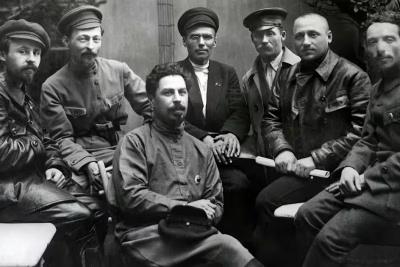
From the Soviet KGB to Contemporary Repression: Traces of Belarusian State Security
Holocaust Memory in Ukraine: The Case of the Babyn Yar Holocaust Memorial Center
Belarusians in the War in Ukraine: Stories, Symbols, and Memory
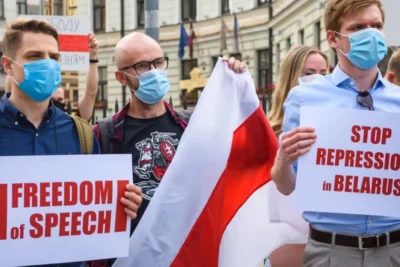
Belarus Youth Movements: The Next Generation of Resistance in 2025
Belarus vs Ukraine: Comparing Two Resistance Movements
Belarus Human Rights Crisis 2025: The Silent Struggle Under Lukashenko’s Regime

Belarus Military in 2025: Between Russian Influence and Domestic Control
 English