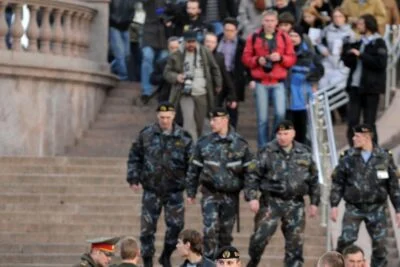
Belarus Metro Bombing 2011: Attack, Trial and Execution
On 11 April 2011 an explosion at Minsk's Oktyabrskaya metro killed 12 and injured over 150. Two men were convicted and later executed. Timeline and sources
+
Belarus remains a country where political, social, and legal developments unfold rapidly and often without transparency. This category delivers timely, verified reporting on breaking events that shape the country’s present reality. From sudden arrests and policy shifts to international reactions and grassroots responses, News & Breaking Developments provides readers with accurate, contextualized updates amid an environment dominated by censorship and state propaganda.
In a restricted media landscape, access to reliable information is itself a form of resistance. This section prioritizes factual reporting, cross-checked sources, and clear distinctions between verified news and emerging developments. It serves readers seeking to understand not only what is happening in Belarus, but why events matter and how they connect to broader political and regional trends.
Political decisions in Belarus often occur without public debate or legislative transparency. Decrees, arrests, legal amendments, and executive orders can reshape the political landscape overnight. This category tracks changes in governance, power structures, and political signaling from state institutions.
Coverage emphasizes consequences rather than rhetoric, examining how new measures affect civil liberties, opposition movements, and everyday life. Contextual analysis ensures that breaking news is not isolated from historical patterns of control and repression.
Moments of unrest and state response remain central to Belarusian news cycles. Even small-scale actions can trigger significant crackdowns. This section documents protests, detentions, police actions, and judicial proceedings as they occur, while acknowledging the risks and limitations of on-the-ground reporting.
When direct verification is difficult, developments are framed cautiously, with updates added as information becomes available. Transparency about uncertainty strengthens credibility and reader trust.
Events in Belarus often provoke immediate responses from foreign governments, international organizations, and human rights bodies. Sanctions, statements, emergency resolutions, and diplomatic shifts frequently follow breaking developments.
This category connects domestic events to international consequences, helping readers understand how Belarus fits into broader geopolitical dynamics involving Europe, Russia, and global institutions.
Changes affecting media freedom often unfold rapidly. Website blocks, journalist arrests, new censorship laws, and platform restrictions can occur with little warning. This section tracks developments in information control and the digital environment.
Monitoring media repression is essential for understanding how narratives are shaped and access to information is restricted during moments of political tension.
Judicial activity is a key indicator of political pressure in Belarus. High-profile trials, sentencing announcements, and legal reinterpretations frequently signal shifts in repression strategy.
Breaking coverage of court cases focuses on procedural integrity, charges, and outcomes, while linking to deeper legal analysis elsewhere on the site.
In authoritarian environments, breaking news can be distorted, weaponized, or deliberately obscured. This category avoids sensationalism and emphasizes verification, timelines, and background. Articles are updated as situations evolve, and corrections are issued when necessary.
By connecting real-time events to long-term patterns, this section helps readers interpret urgency without losing perspective.
All breaking developments are reviewed against multiple sources when possible. Anonymous reports are clearly labeled, and state claims are treated with scrutiny. Editorial independence and methodological transparency are core to this category’s mission.
This approach reinforces trust and positions the site as a reliable reference amid information chaos.
How quickly is breaking news published?
As soon as credible verification is available.
Are sources named openly?
When safe and appropriate; anonymity is used to protect sources.
How are corrections handled?
Updates and corrections are clearly noted within articles.
Is state media used as a source?
Only with critical context and cross-verification.
Why do some stories lack full details?
Information is often restricted during unfolding events.
Are international agencies considered reliable?
Yes, but their statements are contextualized.
How does this differ from opinion content?
This category focuses strictly on factual reporting.
Why is context emphasized in breaking news?
To prevent misinterpretation and propaganda amplification.
16 articles
On 11 April 2011 an explosion at Minsk's Oktyabrskaya metro killed 12 and injured over 150. Two men were convicted and later executed. Timeline and sources
+
What may a Belarusian employer ask in a hiring questionnaire, which questions are banned, and how to report political discrimination at work.
+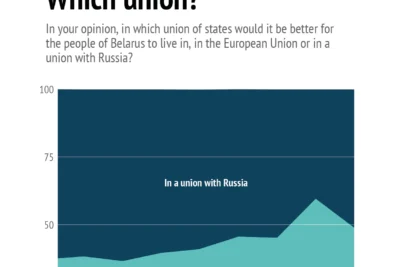
A guide to Belarus public opinion surveys: who still polls, how samples are drawn under repression, and how to read the latest 2025–2026 data.
+
Silent Inflation and Stagnant Wages describe a slow-moving economic crisis that rarely makes headlines but shapes everyday life for millions of Belarusians. Unlike sudden…
+
In an increasingly connected world, activism no longer exists solely in physical spaces. Protests, investigations, campaigns, and community organizing now unfold across digital platforms,…
+
Belarus stands at a crossroads. Once known for its industrial base and growing tech sector, the country is now experiencing sustained emigration that raises…
+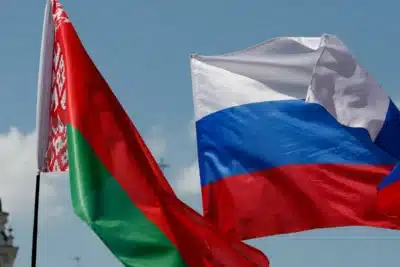
Introduction The ongoing Russian invasion of Ukraine has reshaped geopolitical realities across Eastern Europe and beyond. Among the most unexpected and remarkable developments…
+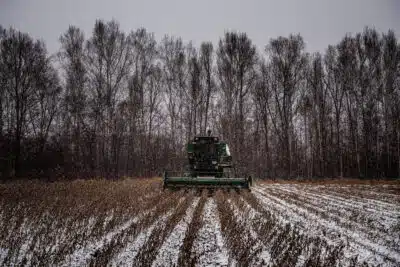
Introduction: Setting the Scene The phrase “Climate Change, Agriculture, and Small Cities in Belarus: Challenge and Opportunity” captures a pivotal transformation unfolding across the…
+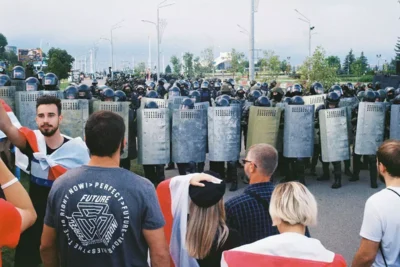
In 2025, the influence of Belarus state media has reached unprecedented levels, becoming one of the most powerful tools in the government’s arsenal to…
+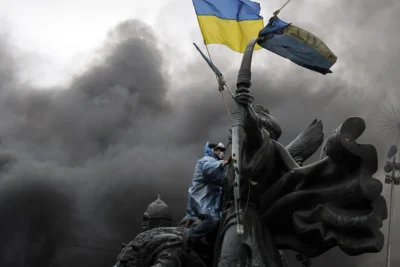
A War Beyond Borders When the war in Ukraine began in February 2022, Belarus was quickly drawn into the geopolitical spotlight. As an ally…
+ English