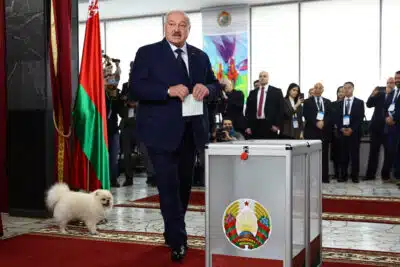
Lukashenko After 30 Years in Power: The Real Assessment

Belarus occupies a complex and increasingly isolated position in international politics. Its foreign relations are shaped by authoritarian governance, human rights violations, and strategic alignment with powerful allies. This category examines how Belarus interacts with the global community and how international responses, particularly sanctions, shape its political, economic, and diplomatic environment.
Rather than existing on the margins of geopolitics, Belarus plays a consequential role in regional security, energy transit, and diplomatic tensions. Understanding its international relationships provides essential context for domestic developments and reveals how external pressure influences internal power structures.
Belarus maintains close ties with select allies, most notably Russia, through political, economic, and military cooperation. These alliances affect sovereignty, defense policy, and economic dependency. Integration initiatives, joint military exercises, and energy agreements reinforce this relationship and limit Belarus’s foreign policy flexibility.
Beyond regional partnerships, Belarus engages selectively with countries outside Europe, often prioritizing political support over economic integration. These relationships offer diplomatic cover but rarely offset the consequences of international isolation.
Relations between Belarus and the European Union have deteriorated significantly over concerns related to elections, repression, and human rights abuses. Diplomatic engagement has given way to sanctions, travel bans, and economic restrictions targeting state institutions and individuals.
This category analyzes how EU policy evolves in response to events inside Belarus, including debates over engagement versus pressure, humanitarian exemptions, and the effectiveness of sanctions as a policy tool.
U.S. relations with Belarus are shaped by democratic governance, regional security, and transatlantic coordination. Sanctions imposed by U.S. authorities often target financial institutions, state-owned enterprises, and security officials.
Coverage focuses on policy statements, legislative measures, and coordination with allies, offering readers insight into how U.S. actions influence Belarus’s international standing.
Sanctions are a central feature of Belarus’s international relations. These measures include asset freezes, export controls, financial restrictions, and travel bans. While designed to pressure leadership, sanctions also affect industries, trade routes, and the broader population.
This category examines the structure, scope, and consequences of sanctions, separating political intent from practical outcomes. It also explores debates over sanction effectiveness, unintended consequences, and enforcement challenges.
Belarus participates in international organizations while facing criticism and scrutiny within them. Its engagement with the United Nations, regional bodies, and specialized agencies often becomes a forum for confrontation over human rights and legality.
Resolutions, investigations, and special rapporteurs play a role in documenting abuses and shaping international narratives. This section tracks institutional responses and diplomatic maneuvering within global forums.
Belarus’s geographic position places it at the center of regional security concerns. Military cooperation, border tensions, and strategic infrastructure have implications beyond its borders. Developments involving Belarus often intersect with broader conflicts and alliances.
Understanding these dynamics is essential for interpreting international reactions and policy decisions related to sanctions and security.
Diplomatic isolation affects trade, investment, and financial access. Restrictions limit foreign investment and complicate economic modernization. At the same time, alternative trade routes and informal networks emerge as responses to sanctions.
This category evaluates how international pressure reshapes economic behavior and state strategy.
International relations are not abstract diplomacy; they directly influence life inside Belarus. Sanctions affect employment, prices, and access to services. Diplomatic isolation shapes migration, education opportunities, and civil society support.
By analyzing external relationships, this category connects global decisions to local realities.
Why is Belarus under international sanctions?
Due to human rights violations, election fraud, and repression.
Do sanctions target the general population?
They aim to target leadership but can have indirect effects.
Is Belarus fully isolated internationally?
No, but its diplomatic options are increasingly limited.
How does Russia influence Belarus’s foreign policy?
Through economic dependence and security cooperation.
Can sanctions be lifted?
Yes, contingent on political and legal changes.
Do sanctions work?
Their effectiveness varies and remains debated.
Is Belarus part of the EU or NATO?
No, but its actions affect both regions.
Why monitor international responses closely?
They shape long-term political and economic outcomes.
1 articles
Lukashenko After 30 Years in Power: The Real Assessment
 English