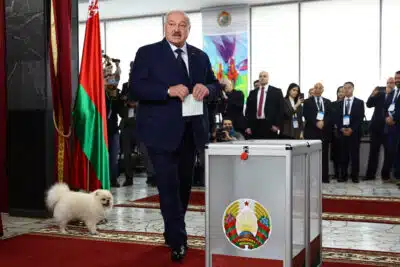
Lukashenko After 30 Years in Power: The Real Assessment

Belarusian politics are defined by an unusually rigid concentration of power, shaped by decades of authoritarian rule, weak institutional independence, and extensive security control. This category examines how political authority functions in Belarus, who truly holds power, and how formal state institutions interact with informal networks of influence. It provides readers with the context needed to understand decisions made by the Belarusian regime and the mechanisms that sustain it.
Unlike pluralistic political systems, Belarus operates under a centralized model where executive authority dominates all branches of government. Elections, courts, media, and security agencies are tightly controlled, leaving little room for independent political competition. Understanding this structure is essential for interpreting daily news, policy decisions, repression tactics, and resistance movements.
At the core of Belarusian politics stands the presidency, which holds overwhelming power over the state apparatus. Since the mid-1990s, the presidency has absorbed authority that would typically be distributed across legislative, judicial, and regional bodies. Presidential decrees often carry the force of law, bypassing parliamentary oversight.
The executive branch controls key appointments across government, including regional governors, judges, prosecutors, and security officials. This vertical system ensures loyalty while limiting institutional autonomy. Political stability is maintained not through consensus or accountability, but through centralized command and coercion.
Belarus has a bicameral parliament, but its role is largely ceremonial. Legislative bodies rarely initiate independent laws and instead function to formalize decisions already made by the executive branch. Electoral processes lack transparency, and opposition candidates are systematically excluded or disqualified.
This absence of genuine parliamentary debate removes an essential mechanism for political accountability. As a result, legislation often reflects executive priorities rather than public needs or policy deliberation.
The judicial system in Belarus operates without meaningful independence. Judges are appointed and dismissed by the executive, and courts frequently serve as instruments of political enforcement rather than impartial adjudication. This is especially evident in cases involving political activists, journalists, opposition figures, and protesters.
Administrative detention, politically motivated charges, and expedited trials are common tools used to suppress dissent. Understanding how the judiciary functions is critical for analyzing human rights violations and political repression.
Security agencies play a central role in maintaining political control. Institutions such as internal security forces, intelligence services, and special police units operate with broad authority and limited oversight. These bodies are not merely law enforcement agencies; they are integral political actors within the power structure.
Surveillance, intimidation, and preventive arrests are used to neutralize opposition before it can mobilize. The security apparatus acts as both a deterrent and an enforcement mechanism, shaping political behavior across society.
Control over information is a foundational element of Belarusian political power. State-owned media dominate television, radio, and print outlets, while independent journalism faces constant pressure through censorship, licensing restrictions, arrests, and forced exile.
Narratives promoted by state media reinforce regime legitimacy, discredit opposition movements, and frame international criticism as foreign interference. Understanding media control helps explain how political narratives are constructed and sustained within the country.
Beyond formal institutions, political power in Belarus is reinforced through informal networks linking government officials, state-owned enterprises, and loyal business elites. Economic dependency on the state creates a system where employment, contracts, and privileges are contingent on political loyalty.
This fusion of political and economic power limits the emergence of independent economic actors and reinforces the regime’s stability. Economic pressure is often used as a political tool against dissenters.
Opposition parties and leaders operate under severe constraints. Many have been imprisoned, silenced, or forced into exile. Political participation outside state-approved structures carries significant personal risk.
As a result, much of Belarus’s political opposition now functions from abroad, relying on international advocacy, digital communication, and external pressure. This dynamic has reshaped the political landscape, creating a fragmented but persistent challenge to centralized authority.
Understanding Belarusian politics requires looking beyond formal titles and official rhetoric. Power in Belarus flows through loyalty networks, security enforcement, information control, and economic dependency. This category helps readers decode these dynamics and understand why change is difficult, how repression operates, and where cracks in the system may appear.
How is political power structured in Belarus?
Power is centralized around the presidency, with weak legislative and judicial independence.
Does the Belarusian parliament have real authority?
No. It largely approves decisions made by the executive branch.
Are elections free and fair in Belarus?
International observers consistently report that elections lack transparency and competitiveness.
How independent is the judiciary?
Courts are closely controlled by the executive and frequently used for political repression.
What role do security forces play in politics?
They are central to enforcing political control and suppressing dissent.
Is there political opposition in Belarus?
Yes, but it operates under extreme pressure, often from exile.
How does economic power support the regime?
State control over employment and resources creates loyalty through dependency.
Why is understanding power structures important?
It explains repression, resistance, policy decisions, and the persistence of authoritarian rule.
36 articles
Lukashenko After 30 Years in Power: The Real Assessment
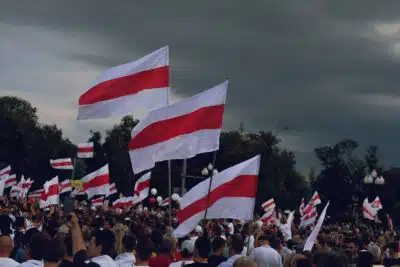
Festivals Without Freedom: Entertainment as Propaganda

Filmmakers in Exile: Creating Without a Homeland
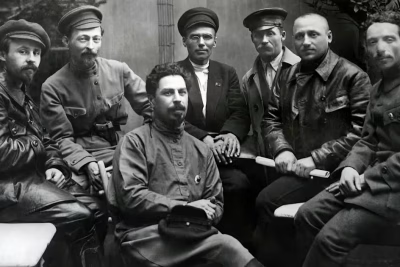
From the Soviet KGB to Contemporary Repression: Traces of Belarusian State Security
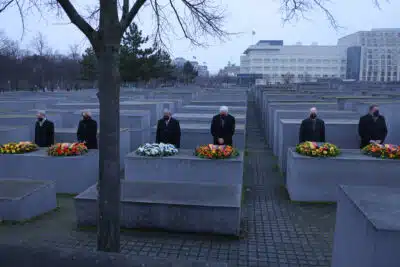
Holocaust Memory in Ukraine: The Case of the Babyn Yar Holocaust Memorial Center
Repression in New Zealand: Human Rights in Belarus and the International Perspective

Climate Change, Agriculture, and Small Cities in Belarus: Challenge and Opportunity
Belarus Prison: Inside the Regime’s Machinery of Repression

Impact of the War in Ukraine on the Belarusian Economy and Society
Belarus Human Rights Defenders in 2025: Voices Against Repression
 English