

Belarusian Resistance Movements of the 20th Century

Table
- Historical Context: A Nation Without a State
- Early 20th Century: National Awakening and Political Mobilization
- Interwar Resistance and Cultural Survival
- World War II and Armed Resistance
- Post-War Repression and Underground Opposition
- The Cold War Era: Silent Dissent
- The Late Soviet Period and the Return of Public Activism
- Resistance Through Memory and History
- Why the 20th Century Still Matters Today
- Historical Credibility
- A Century of Defiance
Belarusian Resistance Movements of the 20th Century form a largely overlooked chapter of European history. Overshadowed by larger neighboring narratives, Belarusian resistance has often been misrepresented, minimized, or deliberately erased. Yet throughout the twentieth century, Belarusians repeatedly organized, resisted, and preserved their identity in the face of imperial domination, totalitarian control, and forced assimilation.
This article examines the major resistance movements that shaped modern Belarus, from early anti-imperial activism to armed partisan struggle, underground cultural resistance, and late-Soviet dissident networks. Understanding this history is essential to grasping contemporary Belarusian society and its ongoing struggle for sovereignty and democratic self-determination.
Historical Context: A Nation Without a State
At the beginning of the twentieth century, Belarus did not exist as an independent state. Its territory was divided between empires, primarily the Russian Empire and, later, the Soviet Union. This absence of statehood profoundly shaped Belarusian resistance movements.
Unlike resistance in established nation-states, Belarusian activism often focused on cultural survival as much as political liberation. Language, folklore, education, and historical memory became tools of resistance.
The Belarusian national movement emerged under conditions of repression, censorship, and Russification, laying the foundation for later organized resistance.
Early 20th Century: National Awakening and Political Mobilization
The early 1900s witnessed a resistance movements national awakening influenced by broader European nationalist movements. Intellectuals, writers, and educators played a central role in shaping political consciousness.
The Belarusian Democratic Republic (1918)
The declaration of the Belarusian Democratic Republic in 1918 marked a pivotal moment. Although short-lived, it represented the first modern attempt at Belarusian statehood.
The republic lacked military strength and international recognition, but its symbolic importance cannot be overstated. It inspired future generations and remains a reference point for Belarusian resistance ideology.
After its collapse, many activists were forced into exile or underground resistance.
Interwar Resistance and Cultural Survival
During the interwar period, Belarusian territories were divided between the Soviet Union and Poland. Resistance strategies varied depending on the ruling power.
Western Belarus under Polish Rule
In Western Belarus, political repression and forced Polonization sparked grassroots resistance. Underground schools, illegal publications, and political organizations sought to preserve Belarusian identity.
Activists faced imprisonment, surveillance, and censorship, yet cultural resistance persisted through literature and education.
Soviet Belarus and Early Repression
Initially, Soviet policies allowed limited Belarusian cultural expression. However, this tolerance quickly gave way to severe repression.
The Stalinist purges of the 1930s decimated the Belarusian intelligentsia. Writers, educators, and activists were executed or sent to labor camps, effectively dismantling organized resistance.
Despite this, memory and identity survived through family traditions and oral history.
World War II and Armed Resistance
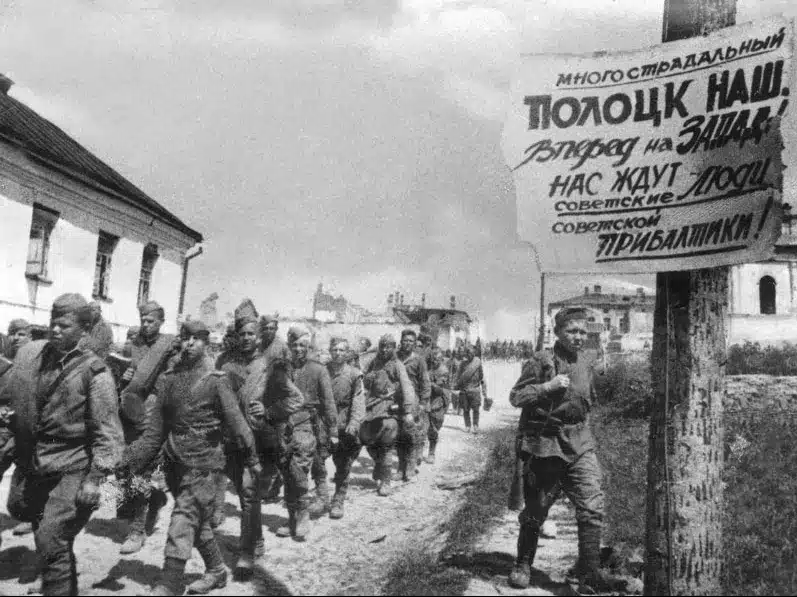
World War II transformed resistance in Belarus. The Nazi occupation created conditions for mass armed struggle, making Belarus one of the most active partisan regions in Europe.
Partisan Warfare
Belarusian partisans conducted sabotage, intelligence gathering, and guerrilla warfare against occupying forces. Entire villages supported partisan units, despite brutal reprisals.
While Soviet narratives later appropriated partisan resistance, many local fighters were motivated by the defense of their homeland rather than ideological loyalty.
According to historical research published by the United States Holocaust Memorial Museum, Belarus suffered catastrophic civilian losses, further radicalizing resistance.
Post-War Repression and Underground Opposition
The end of World War II did not bring freedom. Soviet authorities reasserted control, targeting anyone suspected of nationalist sympathies.
Former partisans, intellectuals, and returning refugees faced arrest and deportation. Open resistance became nearly impossible.
Cultural and Religious Resistance
In this environment, resistance shifted inward. The preservation of language, religious practices, and historical memory became acts of defiance.
Church communities, especially in rural areas, served as informal networks of solidarity.
The Cold War Era: Silent Dissent
During the Cold War, Belarusian resistance rarely took the form of mass movements. Instead, it existed through individual acts of courage.
Samizdat publications, private discussions, and underground art challenged official narratives.
Dissidents and Intellectual Resistance
Belarusian writers and scholars quietly resisted ideological conformity. Many paid a high price through censorship, career destruction, or imprisonment.
The Late Soviet Period and the Return of Public Activism
The 1980s marked a turning point. Perestroika and glasnost created space for renewed activism.
Environmental movements, particularly those addressing the Chernobyl disaster, became platforms for political mobilization.
Historical research groups uncovered mass graves from Stalinist purges, reconnecting society with suppressed history.
Resistance Through Memory and History
One of the defining features of Belarusian resistance movements of the 20th century is their reliance on memory.
When political action was impossible, remembering became resistance. Families passed down forbidden stories, songs, and names.
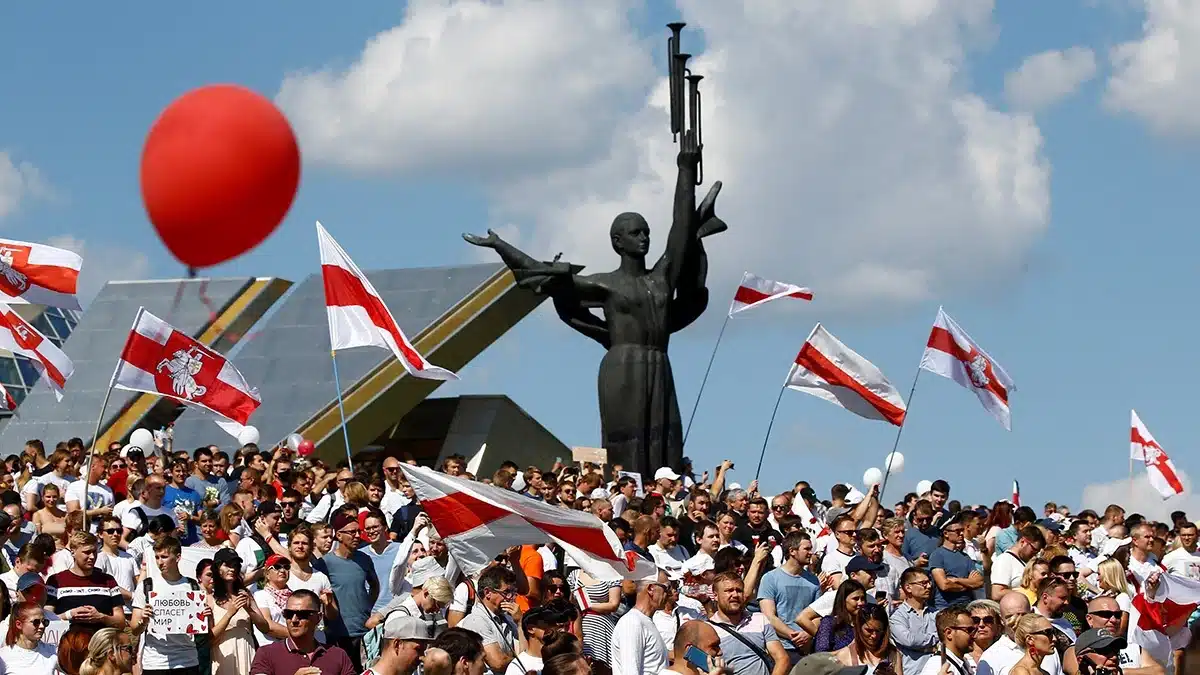
This continuity explains why modern protests often reference historical symbols once thought forgotten.
Why the 20th Century Still Matters Today
Understanding Belarusian resistance movements of the 20th century is essential to understanding contemporary Belarus.
Modern activism did not emerge spontaneously. It is rooted in decades of suppressed struggle, cultural defense, and historical trauma.
Institutions such as the European Parliament have acknowledged the importance of historical memory in shaping democratic resilience.
Historical Credibility
This history demands careful documentation. Misrepresentation has long served authoritarian interests.
Scholars, journalists, and archivists ensure that Belarusian resistance is presented accurately, honoring those who risked everything.
Trustworthy sources, archival research, and survivor testimony form the foundation of credible historical narratives.
A Century of Defiance
The Belarusian Resistance Movements of the 20th Century reveal a continuous struggle for dignity, identity, and autonomy.
Though often fragmented and suppressed, resistance never disappeared. It adapted, survived, and passed quietly from one generation to the next.
Today’s Belarus stands on the shoulders of those who resisted when resistance seemed impossible.
Their legacy endures—not only in history books, but in the collective consciousness of a nation that has never stopped striving for freedom.

 English