
Erased Murals, Persistent Memory

Culture and art in Belarus exist in constant dialogue with power, memory, and identity. Creative expression has long served as both a mirror of society and a form of quiet resistance, reflecting the country’s historical struggles and contemporary realities. This category explores literature, visual arts, music, theater, cinema, and cultural heritage as essential lenses for understanding Belarus beyond politics alone.
In a tightly controlled public sphere, cultural production often carries political weight, even when it does not openly challenge authority. Artistic choices, language use, symbolism, and historical references become acts of meaning-making that preserve identity and articulate alternative visions of society.
Belarusian literature has played a central role in shaping national consciousness. Writers have explored themes of memory, loss, rural life, and political repression, often navigating censorship and ideological constraints. Language choice itself is deeply symbolic, reflecting broader debates about identity and cultural autonomy.
This section examines literary traditions, contemporary authors, and the role of language in cultural expression, highlighting how storytelling sustains collective memory.
Visual art in Belarus spans traditional forms and contemporary experimentation. Painting, sculpture, graphic design, and street art often incorporate historical references and coded symbolism. Artists navigate restrictions through metaphor and abstraction, transforming galleries and public spaces into sites of layered meaning.
Exhibitions, informal art spaces, and digital platforms become alternative arenas for cultural exchange when institutional support is limited.
Music and performance arts have long been vehicles for emotional expression and social commentary. Folk traditions coexist with experimental and contemporary genres, reflecting both continuity and change. Theater and performance art engage directly with social realities, using allegory and reinterpretation to explore power, fear, and resilience.
This category documents how performance spaces adapt under pressure and how audiences participate in cultural dialogue.
Film and documentary provide powerful tools for capturing lived experience. Independent filmmakers often work under difficult conditions, facing funding constraints and censorship. Despite these challenges, cinema remains a vital medium for documenting social change and preserving alternative narratives.
International festivals and online distribution play an important role in amplifying Belarusian voices beyond national borders.
Museums, archives, and cultural institutions shape how history is presented and remembered. State narratives emphasize select interpretations, while independent initiatives challenge omissions and silences. Memory politics influence commemorations, monuments, and public discourse.
This section explores how cultural heritage becomes a contested space where identity is negotiated.
Cultural production increasingly occurs outside Belarus, as artists, writers, and performers continue their work in exile. Diaspora communities play a crucial role in sustaining language, traditions, and artistic networks.
Exile reshapes creative expression, blending nostalgia with new influences and preserving cultural continuity under displacement.
Culture and art provide insight into how societies endure repression and imagine alternatives. They capture emotional truths that statistics and policy analysis cannot. In Belarus, cultural expression remains a repository of resilience, creativity, and identity.
This category offers readers a deeper understanding of Belarusian society through its creative output.
Is artistic expression censored in Belarus?
Yes, direct and indirect censorship affects many forms of art.
Can artists openly criticize the government?
Open criticism often leads to repression or exclusion.
Is the Belarusian language politically sensitive?
Yes, language choice carries cultural and political significance.
Do independent cultural spaces exist?
They exist but operate under pressure or informally.
How does exile affect cultural production?
It shifts platforms but sustains creative continuity.
Are traditional arts still practiced?
Yes, alongside contemporary forms.
Is street art common?
It appears intermittently and is often removed quickly.
Why study culture in a political context?
Culture reveals social values and collective memory.
7 articles
Erased Murals, Persistent Memory
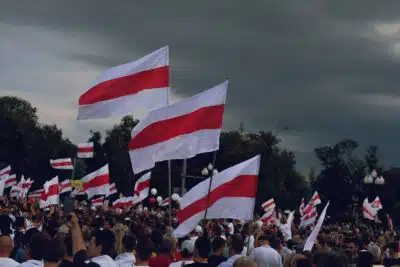
Festivals Without Freedom: Entertainment as Propaganda
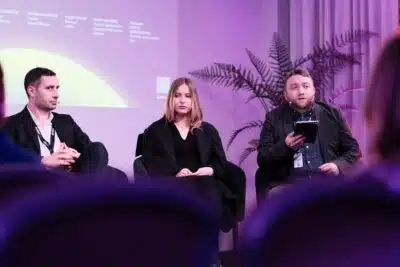
Filmmakers in Exile: Creating Without a Homeland

How Art Preserves Memory When History Is Rewritten
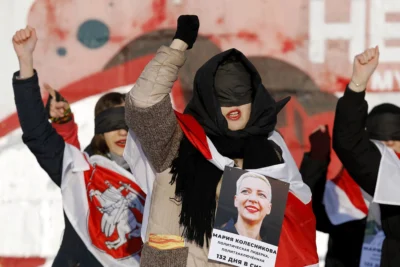
Belarus Resistance Art - How Artists Resist: Music, Graffiti and Subversion

Media Freedom in Belarus 2025: Independent Journalism Under Siege

Alexander Masliakov: The Legacy of a Russian TV Icon
 English