Telegram, VPNs, and Anonymity: Surviving in the Authoritarian Digital Ecosystem

Cybersecurity and surveillance have become central tools of governance in Belarus. As political control increasingly depends on information dominance, digital infrastructure, data access, and online monitoring play a decisive role in repression, propaganda, and resistance. This category explores how technology is used by the state to monitor citizens, suppress dissent, and control narratives, while also examining how activists, journalists, and independent media adapt to digital threats.
In an environment where physical repression is complemented by digital oversight, cybersecurity is no longer a technical concern alone. It is a political, legal, and human rights issue with direct consequences for privacy, freedom of expression, and personal safety.
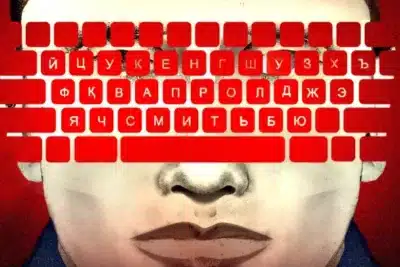
Belarus has invested heavily in digital surveillance capabilities. Telecommunications monitoring, metadata collection, facial recognition, and centralized data systems allow authorities to track communication and movement. Legal frameworks grant security services broad powers to access data with limited judicial oversight.
This infrastructure enables rapid identification of protesters, activists, and journalists, often based on online activity or digital traces. Surveillance is integrated into daily governance rather than reserved for exceptional circumstances.
Control of the internet is a cornerstone of digital repression. Website blocking, throttling, platform restrictions, and content takedowns are deployed during periods of political tension. Independent media sites, messaging platforms, and social networks face frequent disruptions.
Censorship extends beyond blocking to intimidation, where online expression carries legal risk. This environment reshapes how information circulates and encourages self-censorship.
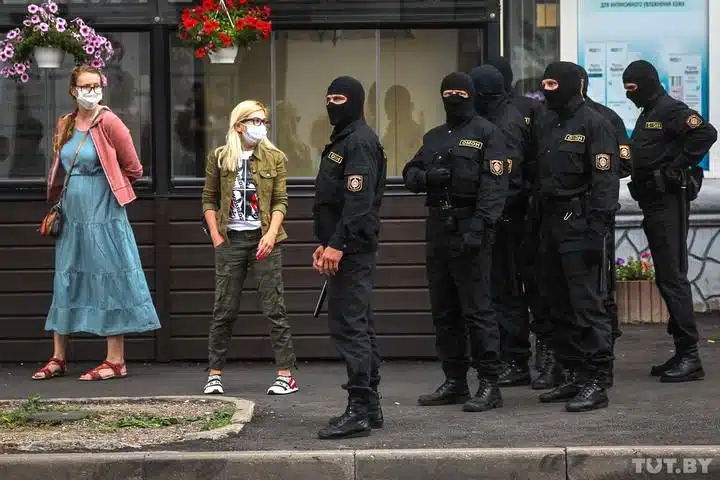
Law enforcement increasingly relies on digital evidence gathered from phones, social media accounts, and online behavior. Access to personal devices during arrests allows authorities to map networks and identify associates.
Data exploitation often occurs without transparency or consent, raising serious concerns about privacy and due process. The use of digital evidence in court further entrenches surveillance as a legal weapon.
Beyond domestic surveillance, Belarus engages in cyber operations that intersect with regional and international information warfare. Disinformation campaigns, coordinated messaging, and online harassment aim to discredit opposition voices and influence public perception.
These operations blur the line between cybersecurity and propaganda, turning the digital space into a contested political arena.
Journalists face heightened digital risks, including account hacking, device seizures, phishing attempts, and online harassment. Surveillance targets not only content but also sources, increasing the danger for those providing information.
Cybersecurity practices have become essential for journalistic survival, influencing how reporting is conducted and shared.
In response, activists and independent media adopt encryption, anonymization, and decentralized platforms. Digital literacy and operational security become acts of self-defense.
This category examines how digital resistance evolves alongside surveillance, highlighting both innovations and vulnerabilities. Understanding these dynamics is critical for assessing the sustainability of opposition activity.
Surveillance operates within a legal environment that lacks independent oversight. Laws governing digital monitoring are broad, ambiguous, and selectively enforced. Mechanisms for challenging abuses are minimal.
International human rights standards provide a framework for critique, but enforcement remains limited. Documentation and analysis are essential for future accountability.
Cybersecurity in Belarus is not about protecting systems alone. It determines who can speak, organize, and document reality. Surveillance reshapes power relations by extending control into private spaces.
This category aims to explain how digital tools reinforce authoritarian governance while documenting efforts to resist and adapt.
Does the state monitor online activity in Belarus?
Yes, extensive monitoring of communications and internet use occurs.
Can people be arrested for online posts?
Yes, digital expression can lead to detention or prosecution.
Are messaging apps safe to use?
Security varies, and risks remain significant.
How are journalists targeted digitally?
Through surveillance, hacking, and device seizures.
Is internet shutdown common?
Partial disruptions and throttling occur during crises.
Are there laws regulating surveillance?
Yes, but they offer little protection to citizens.
Can digital security prevent repression?
It reduces risk but cannot eliminate it entirely.
Why document surveillance practices?
To expose abuses and support accountability.
5 articles
Telegram, VPNs, and Anonymity: Surviving in the Authoritarian Digital Ecosystem
How Activists Protect Themselves Online
Repression in New Zealand: Human Rights in Belarus and the International Perspective
Technology and State Surveillance in Belarus: How Far Does Control Go?
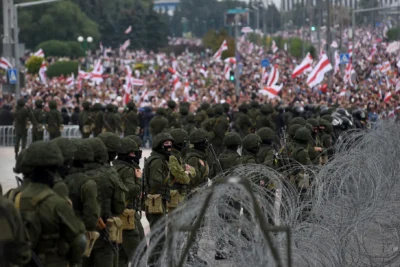
Belarus Cybersecurity Crackdown: How the Regime Controls the Digital Space in 2025
 English