
Belarus Partisan History: Independent Media in Belarus, 1999–2020

6 min read
In this article
Belaruski Partizan was an independent Belarusian news outlet published in Russian and Belarusian from 1999 to 2020. In 2020 the authorities blocked it inside Belarus and its archive moved online. Foreign Policy and Le Temps cited its reporting on politics, repression and the economy. That reporting made the site a reference point before the 2020 protests.
What was Belaruski Partizan?
Belaruski Partizan, also written Belarusian Partizan and in Russian as «Белорусский партизан», began publishing in 1999. The name translates as “Belarusian partisan”. The outlet was based in Minsk and produced reporting in Russian and Belarusian. It positioned itself as an independent voice covering politics, repression and the economy, not as a state or party publication.
From the start it relied on named authors, primary documents and contextual analysis rather than short wire copy. Its reports circulated online for two decades, making the site visible to readers inside and outside Belarus. The outlet formed part of Russian-language journalism while maintaining a Belarusian-language service. Independent media in Belarus are outlets that are not controlled by the state and do not follow the editorial line of state television and newspapers. Because the state has long been the dominant broadcaster, independent titles were both distinctive and vulnerable.
That history sits within a longer struggle for an information space outside state control: Soviet-era repression shaped the information space that independent media later entered. The outlet also belongs to the media that carried Belarusian history into the independence era.
Timeline 1999–2020
The outlet's own archive and the public record confirm the domain's activity across the period, while Reporters Without Borders and Freedom House document the environment in which it operated. Some dates are approximate because the record survives through preserved pages rather than an editorial archive.
| Year | Milestone | Source |
|---|---|---|
| 1999 | Belaruski Partizan begins publishing in Russian and Belarusian from Minsk. | Publicly preserved pages |
| 2000s | The outlet builds an online archive on politics, repression and the economy; foreign correspondents begin to cite it as a Belarusian independent source. | Foreign Policy; Le Temps; publicly preserved pages |
| 2020 | Access is blocked inside Belarus during the protest wave, and the archive moves online. | Reporters Without Borders; Freedom House |
| After 2020 | The original domain remains available through publicly preserved pages. | Publicly preserved pages |
Two dates mark the frame: 1999 for the first issues and 2020 for the block that ended daily publication. The middle period is documented less by single dated events than by the steady growth of the archive and its use by international correspondents. No complete public index of every article survives, because the public record consists of individual pages rather than a seamless editorial database. The record is therefore partial, but it is enough to trace the outlet's shape and its disappearance from reach inside Belarus. The absence of a full index is itself part of the story of media erasure in Belarus.
Coverage and methods
Reporters Without Borders describes Belarus as a country where state media dominate and independent outlets face restrictions; Belaruski Partizan worked in the space those channels left. Its method was documentary: it published primary documents, named sources and contextual analysis rather than unattributed rumour. That approach made the site useful to foreign correspondents who needed a Belarusian perspective outside state channels.
The main areas of coverage included:
- politics and election observation;
- protests, detention and the response of the security services;
- economic policy, including presidential decrees and social costs;
- exile, diaspora communities and memorialisation.
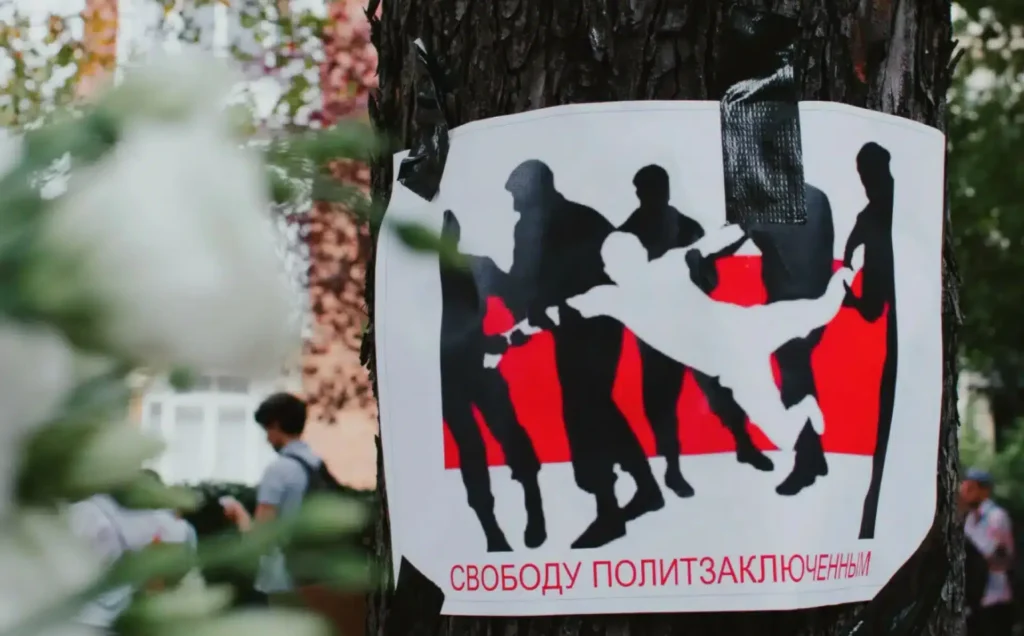
Its human-rights reporting followed the movement of political prisoners (as counted by Viasna) and the use of administrative detention against demonstrators. The work combined daily reporting with longer investigations, and it preserved material that readers in Belarus could consult when official archives did not cover events. The outlet formed part of Russian-language journalism, with a parallel Belarusian-language service for readers who preferred the national language. Its title, Belarusian Partizan, evoked the partisan tradition of the twentieth century, but the editorial project was a news organisation rather than a political movement. Correspondents used the site as a source for details of arrests and court cases because it preserved documents that were not published elsewhere.
Blocking and censorship in Belarus
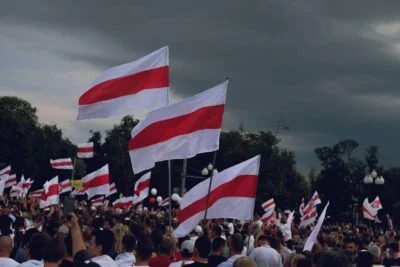
Blocking and censorship in Belarus did not begin in 2020. Independent media operated for years under licensing rules, defamation laws and selective denial of distribution. Belaruski Partizan was blocked at different moments; the final block came in 2020, when the authorities restricted access to the site and other media during the 2020 protests.
Reporters Without Borders and Freedom House have repeatedly described the narrowing space for independent media in Belarus. The final block followed the August 2020 presidential election, in which Alyaksandr Lukashenko claimed a sixth term; Freedom House reported the shutdowns that followed. The same period saw wider documented use of the prison system used against dissenting voices, a system recorded by human rights groups. Before 2020, restrictions tended to follow election periods and protest waves, as documented by Freedom House. The 2020 shutdowns were broader and more sustained because they accompanied the nationwide protest wave. The block on Belaruski Partizan was therefore one event in a broader pattern that can be described as a media blockade.
Legacy in diaspora journalism
After the outlet stopped publishing, its name continued to circulate in the diaspora and among researchers. Foreign Policy cited the Belaruski Partizan brand in its coverage of Belarusian independent media, while Le Temps referred to the site as «Belorousski partizan» in reporting on the Belarusian media landscape. Both foreign outlets treated the outlet as a named Belarusian source.
| Publication | Date | Reference |
|---|---|---|
| Foreign Policy | before 2020 | Cited the Belaruski Partizan brand while covering Belarusian independent media. |
| Le Temps | before 2020 | Referred to the site as «Belorousski partizan» in reporting on the Belarusian media landscape. |
That reception helped carry the brand into exile. Memory of suppressed narratives also survives in physical form, as documented in how erased public murals carry memory of suppressed narratives. The written record benefits from similar attempts to preserve what was removed, including art as a form of memory when media history is erased. Belarusian exile media have continued to cite the archive as a reference for the pre-2020 period, according to the same international reception. Researchers studying online censorship also use the preserved pages to compare what was published with what the authorities removed. The brand remains a landmark in Belarusian independent journalism, not because it survives as a newsroom but because its archive does. The references by Foreign Policy and Le Temps, though few, fixed the name in the international record.
How the archive survives and how to consult it
The original archive survives mainly through public copies of the original domain. The record consists of individual pages as they appeared on specific dates, which is why the collection is uneven but still useful. Readers can consult it without reproducing material from the site. The process below identifies the original domain, not the current site.
- Search for the original domain in a public web record.
- Choose a year and date from the calendar view.
- Open a preserved page to read it as it appeared.
When media history is erased, preserved pages keep the written record available for researchers and interested readers. The public copies do not include every article, but they retain the structure and much of the content that the block removed from ordinary reach. Because these public copies are open to all, no subscription or special access is required.
FAQ
What was Belaruski Partizan?
An independent Belarusian outlet publishing in Russian and Belarusian from 1999 to 2020.
Why was Belaruski Partizan blocked in Belarus?
Reporting on politics, repression and the economy led authorities to block it; the final block came in 2020.
When did Belaruski Partizan stop publishing?
In 2020, when it was blocked and moved its archive online.
Is belaruspartisan.org the original Belarusian outlet?
No; the current site explains its history but does not speak for the former newsroom or republish its texts.
Where can I read the original Belaruski Partizan archive?
Through public web copies of the original domain.
Sources
Reporters Without Borders, Belarus country reports; Freedom House, Belarus country reports; public web copies of the original domain. Foreign Policy and Le Temps are cited by name for editorial reception.
 English
Keep reading