
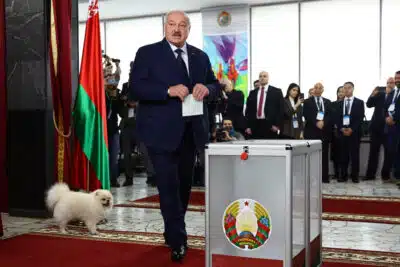
What Did Mikola Statkevich Ask Lukashenko? Challenging the Trial


User1963, Public domain, Wikimedia Commons
7 min read
In this article
- Who is Mikola Statkevich?
- The 2010 election and the crackdown that led to trial
- The trial and the questions to Lukashenko
- Charges, verdict and sentence
- Political prisoner and forced exile: legal meanings
- From the 2020 arrest to the 14-year sentence and 2025 release
- Where the case stands in 2026
- Frequently asked questions
- Sources
At his trial over the 2010 protests, Mikola Statkevich challenged the charges, the security services and the treatment of prisoners; Viasna and FIDH documented the closed proceedings. He was convicted, jailed again in 2021 for 14 years and released in 2025, when he refused forced exile.
Who is Mikola Statkevich?
Mikola Statkevich, also transliterated as Mikalai or Mikalay, is a Belarusian opposition politician and former presidential candidate. In the 2010 presidential election he stood against Alexander Lukashenko as a candidate linked to the unregistered political party Narodnaya Hramada, an opposition group with roots in the Belarusian independence movement of the early 1990s. Human rights organisations including Viasna and FIDH have described Statkevich as a political prisoner during his periods of detention. He was arrested after the 2010 post-election protests, released, detained again in 2020 and released in 2025. Viasna lists him among the political prisoners of the post-2020 period, and FIDH followed his 2010 case from investigation through appeal. The spelling Mikola reflects the Belarusian form; English-language reporting often uses Mikalai or Mikalay. His case forms part of the longer story of Lukashenko after 30 years in power, because election disputes and protest cycles have repeatedly fed into criminal prosecutions.
The 2010 election and the crackdown that led to trial
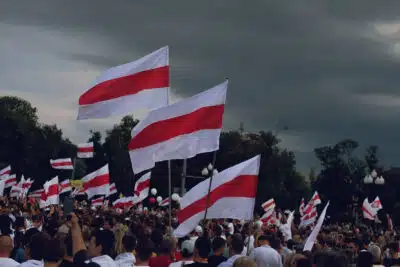
The 2010 presidential election ended with the Central Election Commission declaring Alexander Lukashenko the winner. Protests gathered on Independence Square in Minsk, and police dispersed demonstrators. Opposition candidates, including Mikola Statkevich, were detained in the following days. Viasna, a Belarusian human rights centre, recorded the arrests and later monitored the trials. The authorities charged several protesters and candidates with organising mass disorder under article 293 of the Criminal Code. International observers questioned the fairness of the election and the scale of the police response. Statkevich's candidacy had made him one of the most visible opposition figures in the campaign. Statkevich denied the charges and his defence described the detention as politically motivated. The case moved from pre-trial detention into a closed hearing. The article 293 prosecution became one of the main legal tools used after the 2010 protests, according to FIDH. Belarusian resistance movements of the 20th century had faced similar cycles of demonstration and punishment.
The trial and the questions to Lukashenko
The trial took place in 2011 and 2012 behind closed doors, according to Viasna and FIDH. During it, Mikola Statkevich put questions to Alexander Lukashenko that challenged the prosecution's version of events, the conduct of the security services and the treatment of prisoners. No verbatim courtroom transcript has been published, so the description here follows the documentation by Viasna and FIDH and later reports rather than quotes the exchange. The questions shifted the expected direction of a closed political trial: instead of answering for his own conduct, Statkevich used the hearing to ask the head of state to account for the prosecution. That made the exchange memorable for the Belarusian opposition and for international observers, who could not enter the courtroom but followed the case through statements and later publications. Viasna and FIDH incorporated the exchange into their documentation of the trial, along with the case's broader use of article 293(2).
Why the questions mattered
The questions were significant because they named in court the dynamic behind many post-election prosecutions: charges brought under a public-order law, evidence produced by the security services, and closed proceedings that limited independent scrutiny. The continuity between Soviet-era prosecution methods and the 2010 case is explored in from the Soviet KGB to contemporary repression. In both periods, political cases often relied on closed proceedings and on evidence produced by the security services. The questions also resonate with later stages of Statkevich's case. When he was arrested again in 2020 and sentenced in 2021, rights groups described the same combination of closed hearings and security-service testimony. His 2025 refusal of exile returned him to the centre of a debate about whether release could be converted into deportation. Because no official transcript has been published, English-language summaries differ on the exact wording, and available accounts do not provide a complete list.
Charges, verdict and sentence
In the 2010 case, the indictment relied on article 293(2) of the Belarusian Criminal Code, which covers mass disorder, and the case was monitored by FIDH, the International Federation for Human Rights. Viasna and FIDH described the proceedings as closed and criticised the absence of full public scrutiny.
| Date | Event | Status or result | Source |
|---|---|---|---|
| 2010 | Post-election protests; Statkevich detained | Custody | Viasna, FIDH |
| 2011–2012 | Trial held behind closed doors | Closed proceedings | Viasna, FIDH |
| 2011–2012 | Conviction under article 293(2) | Convicted | FIDH |
| May 2020 | Arrest during the 2020 protest cycle | In detention | Viasna, RFE/RL |
| 2021 | Sentenced to 14 years | Imprisonment | Viasna, RFE/RL, AP |
| 2025 | Released; refused forced exile | Free in Belarus | RFE/RL, AP |
In Belarusian practice, article 293 allows for criminal punishment of actions defined as mass disorder, and the 2010 prosecutions applied it broadly. For Statkevich, the 2010 conviction was followed by a later, separate 2021 sentence of 14 years after the 2020 protests. The table above summarises the main dates without reproducing every legal argument from the closed hearings. The central legal finding was the mass-disorder article used against protesters and opposition figures after the 2010 election. The 2021 sentence of 14 years became the main reference point for how the case was discussed internationally.
Political prisoner and forced exile: legal meanings
The term "political prisoner" is not a formal category in Belarusian criminal law; it is an assessment used by human rights organisations. Viasna counts people it considers imprisoned for political activity, and FIDH has used the term in relation to Statkevich. The OHCHR and the UN Working Group on Arbitrary Detention provide a legal benchmark: detention is arbitrary when it lacks a lawful basis or when the criminal process is used to punish political expression. In practice, forced exile or deportation means removing a person from the country against their will, often as a condition of release. When Statkevich was released in 2025, he refused what he and rights groups described as an attempt at forced exile. The conditions that give such terms their weight are documented in inside Belarusian prisons under the current authorities. The distinction matters because a criminal conviction under article 293 is a legal finding, while the label of political prisoner is a human rights classification that can persist after release. Similarly, refusing forced exile is not a new charge but a political and legal position.
From the 2020 arrest to the 14-year sentence and 2025 release
Statkevich was detained again in May 2020 after joining the large street protests that followed the presidential election of that year. Viasna recorded his arrest and the subsequent prosecution. In 2021 a court sentenced him to 14 years in a penal colony. The sentence was part of a wider pattern of cases against Belarus human rights defenders in 2025. In 2025, after international pressure and negotiations, he was released. RFE/RL and AP reported that he refused to be deported or forced into exile, and that security forces later took him away before his situation stabilised. Human rights groups described this sequence as the use of release as a bargaining tool in the handling of political prisoners. The term of imprisonment was among the longest of the post-2020 political sentences against opposition figures that Viasna documented. His release came after diplomatic appeals from Western governments and international human rights organisations. AP described a scene at the border in which Statkevich rejected the deportation offer; RFE/RL's Belarus Service reported that he was then taken away by security forces. The episode raised the question of whether political prisoners could be removed from Belarus without their consent. Viasna kept the case on its political prisoner list.
Where the case stands in 2026
As of November 2026, no new conviction against Mikola Statkevich had been publicly announced and he remained in Belarus. Viasna continued to describe him as a political prisoner, and RFE/RL and AP had not reported a change in his legal status after the 2025 refusal of exile. The questions from the 2011–2012 trial remain part of how the case is remembered. International legal bodies and human rights groups have kept the case in their documentation of Belarusian political prisoners. The absence of a further sentence does not settle the underlying questions, because the terms of release and the possibility of renewed prosecution remain open. The refusal of exile in 2025 left unresolved whether the government would attempt removal again or reopen a criminal case. As long as no final status is published, Statkevich's legal situation remains a subject of concern for rights monitors. Both possibilities would renew the questions he first raised in 2011. The case, in other words, is closed only in memory, not procedurally. Viasna continues monitoring.
Frequently asked questions
What did Mikola Statkevich ask Lukashenko at trial? Viasna and FIDH documented that he put questions challenging the charges, the security services and the treatment of prisoners.
Why was Statkevich on trial? He was tried for his role in the 2010 post-election protests, under article 293 of the Belarusian Criminal Code.
What sentence did he receive? He was convicted in the 2010 case, sentenced to 14 years in prison in 2021, and released in 2025.
Why did he refuse exile in 2025? RFE/RL and AP reported that he rejected forced deportation and stayed in Belarus.
Is Statkevich considered a political prisoner? Yes; human rights groups such as Viasna count him as a political prisoner.
Sources
- Viasna (Human Rights Centre "Viasna") — monitoring of the 2010–2012 trial, the 2020 arrest and the 2021 sentence.
- FIDH (International Federation for Human Rights) — trial observation and analysis of article 293(2) of the Belarusian Criminal Code.
- OHCHR (UN Working Group on Arbitrary Detention) — legal definitions of arbitrary detention and forced exile.
 English
Keep reading