
Belarus–Russia Military Integration: Bases, Exercises, Nuclear Weapons and the Limits of Sovereignty

6 min read
In this article
Belarus hosts two Russian military facilities — the Vileyka VLF transmitter and the Baranavichy radar station — and since 2023 has stored Russian tactical nuclear weapons. Joint exercises, an integrated air-defence system and the Union State framework have deepened cooperation, but Minsk keeps formal command of its own forces and has not sent them to fight in Ukraine.
Since the mid-1990s, Belarus and Russia have built a dense military relationship. Two permanent Russian installations operate on Belarusian territory, and in mid-2023 the two governments acknowledged the storage of Russian tactical nuclear weapons there. The relationship remains asymmetric: Belarus depends on Russian equipment, training and air defence, but it has preserved formal command over its own armed forces. That balance shapes how far military integration has progressed and where Belarus has stopped short. The result is an integration process that is deeper than in most post-Soviet states, yet short of the full merger implied by the term Union State.
What Russian military assets are on Belarusian soil?
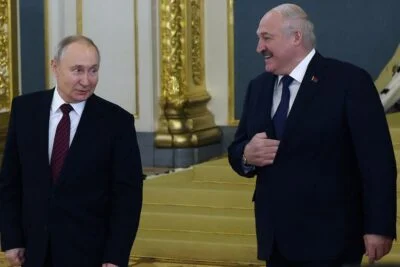
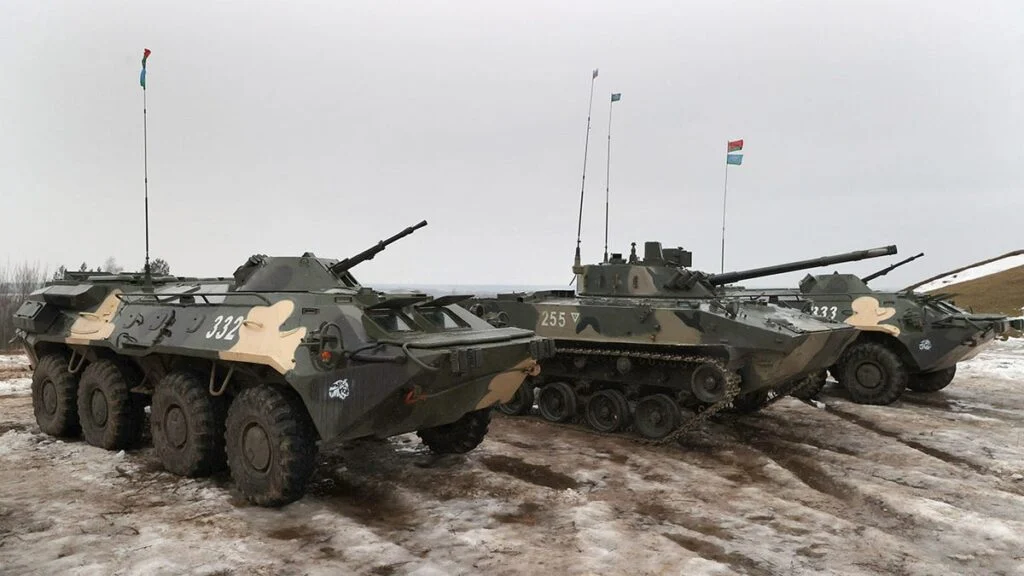
Russian military presence in Belarus takes several forms. The two most visible fixed assets are the Vileyka VLF transmitter and the Baranavichy radar station, both of which date to the 1995 agreements. The International Institute for Strategic Studies has documented these installations as part of Russia's military infrastructure abroad. They serve communications and early-warning functions for Russian forces and are operated by Russian personnel. Since mid-2023, the picture has included Russian tactical nuclear weapons, announced by Russian President Vladimir Putin and Belarusian President Alexander Lukashenko.
The table below summarises the main Russian assets reported on Belarusian soil.
| Asset | Location | Year of entry / announcement | Estimated scale | Source |
|---|---|---|---|---|
| Vileyka VLF transmitter | Vileyka, Minsk Region | 1995 | Small permanent Russian staff; exact number not independently quantified | IISS |
| Baranavichy radar station | Baranavichy, Brest Region | 1995; modernised 2021 | Small permanent Russian staff; exact number not independently quantified | IISS |
| Tactical nuclear weapons storage (announced) | Undisclosed sites in Belarus | Announced 25 June 2023 | Reported; no independent verification of warheads | Reuters |
| Zapad and Union Shield exercises | Rotating training grounds in Belarus | Periodic; several large exercises since 2009 | Several thousand troops reported by state media; no independent figure | IISS |
| Joint air-defence system | Western Belarus and the Belarus–Russia border zone | Since 2009 | Not quantified | IISS |
The fixed installations are the most concrete part of integration. The Vileyka transmitter provides very-low-frequency communication with Russian submarines, while the Baranavichy station hosts early-warning radar under Russian control. The 2023 nuclear announcement changed the character of the relationship, but the locations and number of storage sites have not been independently verified. Exercises rotate through Belarusian training areas and are described by Minsk as joint defence measures.
How did integration deepen from 1994 to 2026?
Military integration between Belarus and Russia has a dated sequence of agreements and events. The IISS records the main stages from the early 1990s onward. The process has not been linear: periods of closer cooperation have alternated with public bargaining by Minsk, especially after the 2020 protests and the full-scale invasion of Ukraine in 2022.
- 1995 — Belarus and Russia signed agreements that gave Russian forces use of the Vileyka VLF transmitter and the Baranavichy radar station. The same legal framework established the basis for a joint air-defence system.
- 1999 — The Treaty on the Creation of a Union State between Belarus and Russia set out integration in economic, foreign and defence policy, without creating a single army.
- 2009 — Belarus joined the Collective Security Treaty Organization's rapid reaction force while continuing to host Russian exercises and air-defence coordination.
- 2015 — Meduza reported that French President François Hollande called for Russian troops to leave Belarus during negotiations after the first Minsk agreements.
- November 2021 — Belarus and Russia adopted a new Union State military doctrine, described by Lukashenko as a response to Western pressure.
- 24 February 2022 — Russia launched the full-scale invasion of Ukraine. Belarusian territory served as a staging area for Russian forces moving toward Kyiv, though Belarusian troops did not join the offensive.
- 25 June 2023 — President Putin announced the deployment of Russian tactical nuclear weapons to Belarus, saying storage facilities were ready, as Reuters reported.
- 2024–2025 — Belarusian and Russian officials, including Russian Security Council Secretary Sergei Shoigu, discussed further military infrastructure, according to state media; no final agreement on new permanent bases was confirmed.
The sequence shows two patterns. First, legal frameworks have almost always preceded or accompanied new Russian deployments. Second, Minsk has used the public framing of joint defence to avoid committing Belarusian units to combat. The years after 2022 tested that bargain, as Lukashenko's three decades in power came under pressure from both Moscow and the West.
Where does Belarus still draw limits?
At each stage, the limits have mattered. Belarus has not transferred command of its armed forces to Moscow, and the Union State does not create a joint army. Lukashenko has repeated that Belarusian soldiers will not fight in Ukraine, as Meduza reported. In February 2022, Belarus allowed Russian units to use roads, airfields and rear bases, but it did not place Belarusian brigades under Russian command.
Internal repression also creates genuine constraints. Independent analysts argue that the 2020 protest movement showed Lukashenko that large deployments on Russia's behalf carry domestic risk. Direct participation in the war would undermine the argument that integration is a defensive choice. The formal command structure remains in Minsk, even though Russian officers, equipment and infrastructure are embedded in Belarusian air defence and early warning.
Negotiations over further bases in 2024–2025 did not produce a new permanent deployment, according to statements by Lukashenko. That suggests a pattern: Minsk accepts deep cooperation that does not require Belarusian combat casualties, and it bargains over anything more. Volunteers with Belarusian backgrounds fight on both sides, but no state-deployed Belarusian units have joined the front line. Western officials disagree over whether command autonomy is substantive or mostly rhetorical; the absence of Belarusian units on the front line remains the clearest observable limit.
Why does this matter for Ukraine, Poland, Lithuania and NATO?
Belarus sits between Russia and NATO's eastern flank. The Suwałki Corridor, a narrow strip on the Poland–Lithuania border, separates Belarus from the Russian exclave of Kaliningrad and is a key concern for NATO planners. Russian forces in Belarus can put pressure on the corridor without moving through Ukraine. Hrodna (Grodno), in western Belarus, sits close to that corridor and to Kaliningrad.
During the early phase of the invasion in 2022, Russian troops moved from Belarus into northern Ukraine, toward Kyiv. Although that front eventually collapsed, the route remains important for any future Russian operation. Ukraine must keep forces along the Belarus border as a precaution, which limits its ability to concentrate against Russian forces in the east.
For Poland and Lithuania, deeper military integration represents a direct geographical threat. Even without Belarusian combat units, Russian missile, air and logistical assets in Belarus extend the reach of Russian forces along NATO's border. That is why exercises, nuclear storage and the joint air-defence system are read in Vilnius and Warsaw as more than symbolic. The economic and social impact of the war has reinforced Belarusian dependence on Russian subsidies, leaving Minsk with little room to distance itself from Moscow's security agenda.
How do human rights and political prisoners fit into the security picture?
The UN Office of the High Commissioner for Human Rights has documented mass arrests and arbitrary detentions since August 2020. Human rights groups, including Viasna and Belarusian human rights defenders, count political prisoners and publish running totals. That repression has become part of the security picture because Minsk has occasionally linked prisoner releases to negotiations with Western governments.
Lukashenko has kept security policy aligned with Moscow while presenting releases or sentences as sovereign choices. Independent observers note that political prisoners have become one of the few areas where Minsk can bargain for Western attention without changing its military posture. Belarusian resistance movements have a long civic history, but the post-2020 wave operates mainly through exile networks and labour action rather than armed opposition.
The link matters for the military question because a government under domestic pressure is less able to withstand Russian demands. That does not mean the integration process will reverse; it helps explain why Minsk continues to seek formal guarantees even as it cooperates with Moscow.
FAQ
- Is Belarus still friendly with Russia? Yes in security terms: it hosts bases, nuclear storage and joint exercises, while publicly framing this as Union State cooperation.
- How powerful is the Belarus military? The Belarusian armed forces are smaller than Russia's — roughly 45,000–60,000 active personnel by independent estimates — and are increasingly tied to Russian command infrastructure.
- Do Belarusians want to be part of Russia? Polling is unreliable; independent surveys conducted outside Belarus suggest most do not support full unification, but the data are partial.
- Why is Belarus so supportive of Russia? Economic dependence, the 2020 protest crackdown and the Union State framework push Minsk toward cooperation with Moscow while it seeks security guarantees.
Sources
- Meduza — reporting on Lukashenko's statements and the 2015 Hollande call.
- International Institute for Strategic Studies — estimates and deployment documentation.
- Reuters — 25 June 2023 report on the tactical nuclear weapons announcement.
- Office of the United Nations High Commissioner for Human Rights — documentation of mass arrests since 2020.
 English
Keep reading